Demonstration content — replace before production.
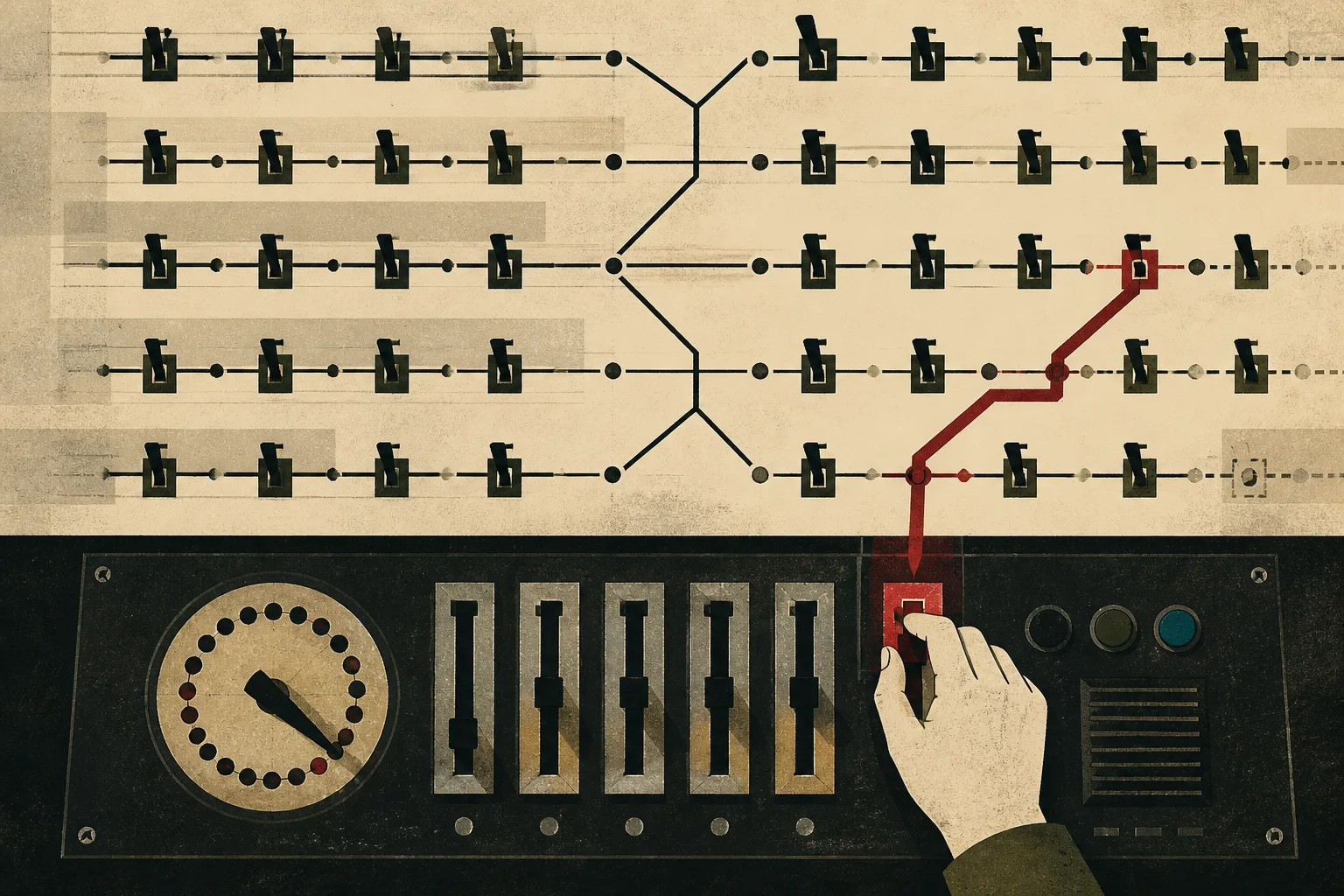
Defaults are useful because they let us begin. They are also decisions made somewhere else: by a product team, a convention, or a moment in history that may no longer match the work in front of us.
The point is not to reject every default. Constant customization can become its own form of avoidance. The useful question is simpler: which settings quietly shape the way we pay attention?
Tools have an editorial position
A writing tool suggests what a document is. A feed suggests what deserves the next minute. A notification setting makes a claim about who may interrupt whom.
These choices become easier to see when they fail. Until then, they often disappear into the background and feel inevitable.
A small counterpractice
One response is to review a single default at a time. Keep the ones that reduce friction. Change the ones that repeatedly pull the work away from its purpose. Leave the rest alone.
Intentional tools are not necessarily complicated tools. Often they are ordinary tools with fewer unexamined permissions.